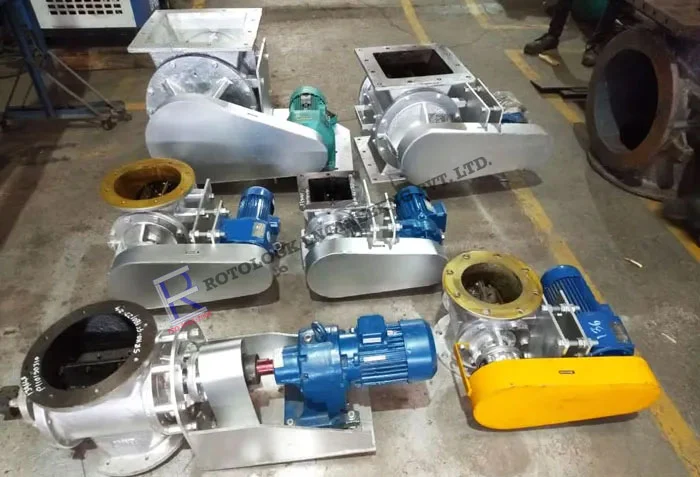
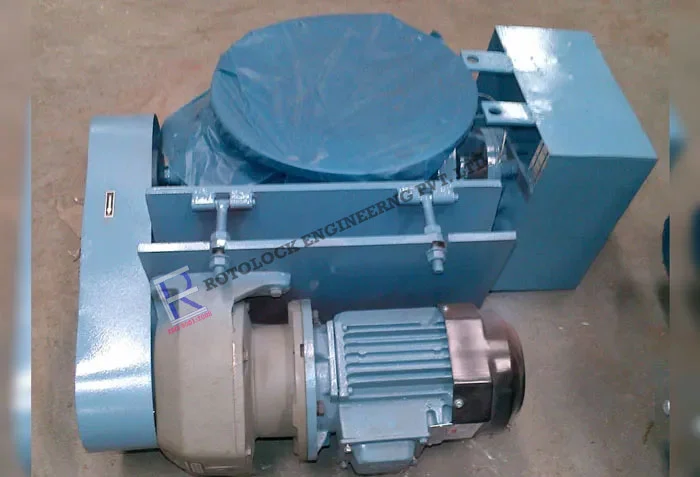
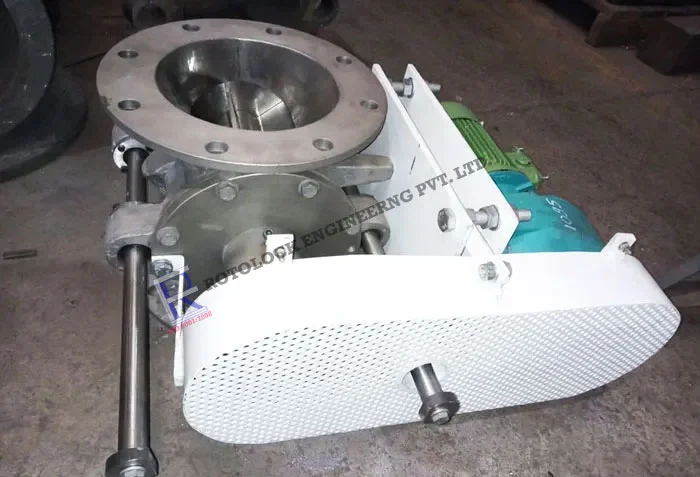
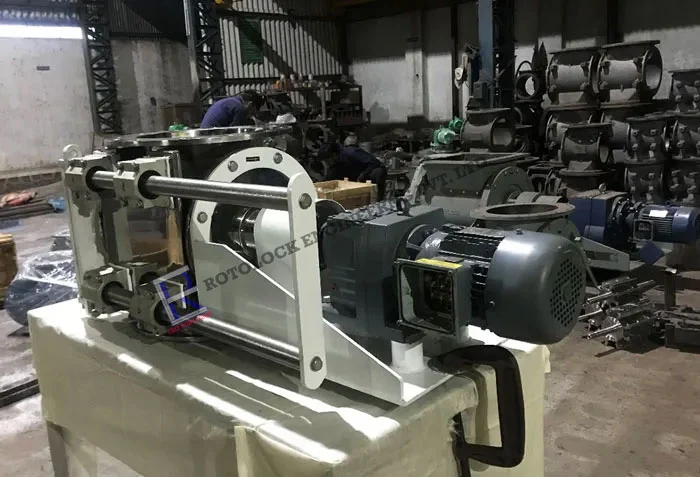
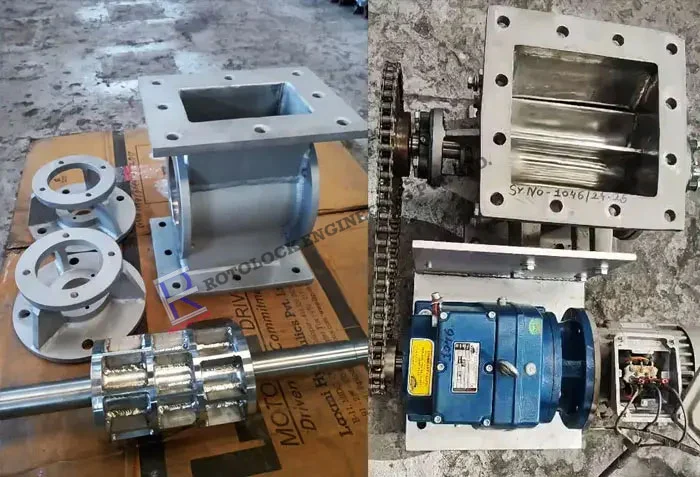
Rotolock Engineering Pvt. Ltd. is a trusted Rotary Valve Manufacturers in Indonesia, Suppliers and Exporters in Indonesia. We are supplying industrial solutions to meet industrial bulk material handling and process automation needs. Our Company was founded in 2006 with a mission to provide equipment solutions that facilitate controlled material discharge, consistent feeding and reliable industrial operations. Our rotary valves are designed for use in a variety of industries and applications with powders, granules and other dry bulk materials.
We as Industrial Rotary Valve Suppliers, recognize the need to choose an appropriate configuration of the valve that matches the material properties, process conditions and requirements. Our goal is to provide customers looking for reliable rotary valve solutions to be used in manufacturing plants, processing facilities and material handling systems across the Indonesia. We create solutions that facilitate efficient material transfer, controlled flow and integration with industrial equipment.
What is a Rotary Valve?
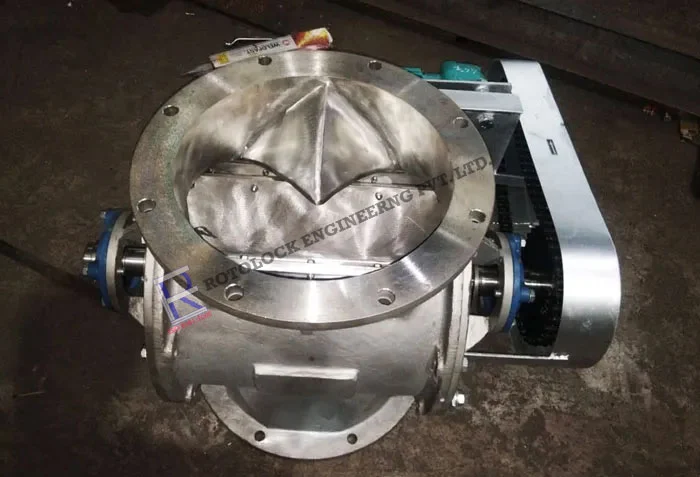
A rotary valve is a mechanical device used to regulate the movement of bulk materials from one section of a processing system to another. It generally consists of a rotating rotor with multiple pockets installed inside a stationary housing. As the rotor turns, material enters through the inlet, fills the pockets and moves towards the outlet for controlled discharge. Rotary valves are commonly installed beneath hoppers, silos, dust collectors, bag filters, cyclones and other material handling equipment.
How Does Rotary Valve Works?
Being a leading Rotary Valve Manufacturers in Indonesia, we have mentioned the working process such as below:
Material Entry: Bulk material enters the valve through the inlet connected to a hopper, silo, dust collector or processing unit.
Rotor Pocket Filling: The material fills the pockets formed between the rotor blades inside the valve housing.
Controlled Rotation: A motor and gearbox rotate the rotor at a suitable speed according to the required feeding rate and material properties.
Material Transfer: The rotating pockets carry the material from the inlet towards the outlet while maintaining controlled movement through the valve.
Material Discharge: As the pockets reach the outlet, the material is released into the next stage of the process through gravity or the connected conveying arrangement.
Air Leakage Control: In suitable designs, the rotor and housing arrangement helps restrict air movement between connected equipment. Actual sealing performance depends on rotor clearances, pressure differential, material properties and operating conditions.
What Are the Types of Rotary Valves We Provide?
As Rotary Valve Manufacturers in Indonesia, we understand that different industries require different valve configurations depending on their material handling processes and operating conditions.
SS Rotary Valve: A stainless-steel rotary valve can be considered for applications requiring corrosion resistance, hygienic construction or specific material compatibility. Stainless steel grade, surface finish, sealing arrangement and cleaning requirements should match the intended process.
Rotary Airlock Valve: Rotary Airlock Valve transfers powders and granules between connected equipment while helping restrict unwanted air movement between pressure zones. It is commonly installed beneath hoppers, silos, bag filters and dust collectors.
Rotary Feeder Valve: Rotary Feeder Valve regulates the flow of bulk materials into downstream processing equipment. It uses a rotating pocketed rotor to deliver material at a controlled rate and is suitable for manufacturing plants, processing lines and automated feeding systems.
Industrial Rotary Valve: Used in industrial production and material handling systems to regulate the flow of powders, granules and other dry solids. Selection depends on required capacity, construction material and operating conditions.
Rotary Valve for Bulk Material: Used for controlled discharge of bulk solids such as granules, minerals, plastic pellets and other dry materials. The valve configuration depends on particle size, bulk density, abrasiveness and required discharge rate.
Technical Specifications of Rotary Valve
As Rotary Valve Suppliers in Indonesia, we consider following typical design parameters when evaluating equipment requirements. The actual specifications depend on the selected model, material characteristics and application.
Specification
Typical Design Range
Equipment Type
Rotary Valve / Rotary Feeder
Material Handled
Powders, Granules and Dry Bulk Solids
Valve Configuration
Round / Square
Rotor Design
6–12 Blades
Housing Material
Cast Iron / Carbon Steel / SS304 / SS316
Rotor Material
Carbon Steel / SS304 / SS316
Drive Arrangement
Geared Motor, 0.37–5.5 kW
Operating Speed
10–30 RPM
Capacity
1–50 m³/h
Sealing Arrangement
Standard / Application-Specific
Operating Temperature
Up to 200°C
Connection Type
Flanged, 50–300 mm
What are the Benefits of Our Industrial Rotary Valve?
As Rotary Valve Exporters in Indonesia, we focus on equipment features that support dependable material handling, suitable construction and compatibility with industrial processes.
Durable Construction: Suitable housing and rotor materials can be selected according to material abrasiveness, operating conditions and the expected service environment.
Material Compatibility: Carbon steel and stainless steel construction options can be considered according to the material being handled and process requirements.
Dust Collection Integration: Rotary valves can be installed beneath compatible dust collectors, bag filters and cyclones for controlled dust discharge.
Controlled Material Flow: The rotating pocket arrangement helps regulate the discharge of powders, granules and other dry bulk materials.
Application-Specific Design: Valve dimensions, rotor configuration, drive arrangements and connection details can be evaluated according to installation requirements.
Where is Rotary Valve Used?
As Rotary Valve Dealers in Indonesia, we provide application-focused solutions for industrial facilities that require controlled movement of dry bulk materials.
Food and Powder Processing: Rotary Valve for Powder Suitable rotary valves can transfer dry ingredients such as flour, sugar and other powders when the construction, cleaning and hygiene requirements are met.
Plastic and Polymer Processing: Rotary valves can help transfer plastic granules, polymer pellets and other compatible dry materials between storage and processing equipment.
Cement Industry: Rotary Valve for Cement Industry applications can support cement powder discharge from silos, hoppers, bag filters and dust collection equipment.
Chemical Industry: Rotary Valve for Chemical Industry applications can handle compatible powders and granules in processing and material transfer systems, subject to suitable material selection.
Dust Collection Systems: Rotary Valve for Dust Collection is used beneath filtration equipment to discharge collected dust and support the operation of connected systems.
Industrial Application Example – Rotary Valve Integration
A rotary valve can be integrated into a bulk material handling system to regulate the discharge of process powder or collected dust.
Phase 1 – Application Assessment: Material characteristics, discharge requirements, pressure conditions and installation details are reviewed.
Phase 2 – Valve Selection: A suitable rotor design, housing material, valve configuration, sealing arrangement and drive system are selected according to the application.
Phase 3 – System Installation: The valve is installed beneath the relevant hopper, silo, dust collector or processing unit with suitable mounting and connections.
Phase 4 – Operational Evaluation: Material flow, rotor movement, discharge consistency and overall performance are evaluated under the intended operating conditions.
Phase 5 – Maintenance Planning: Inspection and maintenance schedules are established according to operating hours, material characteristics and manufacturer recommendations.
How Is the Rotary Valve Price Determined?
Important factors affecting the Rotary Valve Price include:
Valve size, rotor volume and connection dimensions.
Housing and rotor construction materials.
Stainless steel grade for an SS Rotary Valve.
Required capacity and operating speed.
Operating temperature and pressure differential.
Why Choose Rotolock Engineering Pvt. Ltd?
Industrial Equipment Compatibility: Our approach considers the integration of rotary valves with hoppers, silos, dust collectors, filters and bulk material conveying systems.
Industry-Specific Requirements: We understand that cement, chemical, powder processing and general manufacturing applications may require different equipment configurations.
Industrial Material Handling: We focus on rotary valve solutions for controlled material feeding and discharge across suitable industrial applications.
Flexible Material Options: Housing and rotor materials can be evaluated to suit different operating environments, including applications where stainless steel construction is required.
Rotolock Engineering Pvt. Ltd. is a leading Rotary Valve Manufacturers in Indonesia, Suppliers and Exporters in Indonesia. Our rotary valve solutions can be used in the powder transfer, dust collection, cement processing and chemical handling and other appropriate industrial processes. When selecting a valve, we pay attention to the features of the materials, construction needs, working environment and equipment compatibility. Selecting an appropriate rotary valve contributes to stable feed, reliable performance, and seamless integration with other process equipment. Contact us to discuss your Rotary Valve requirements.