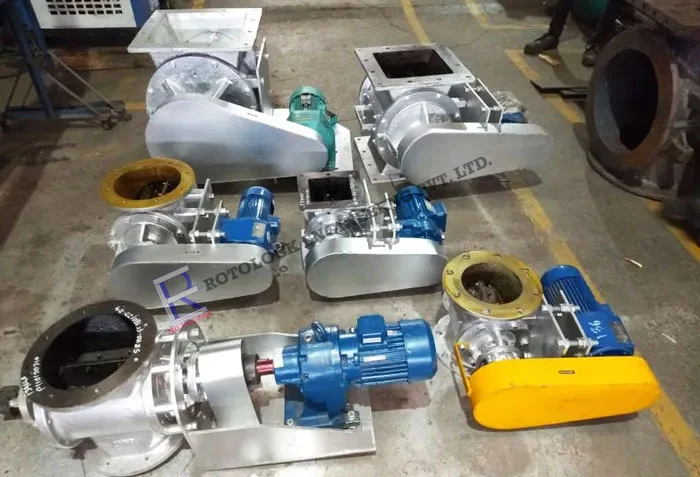
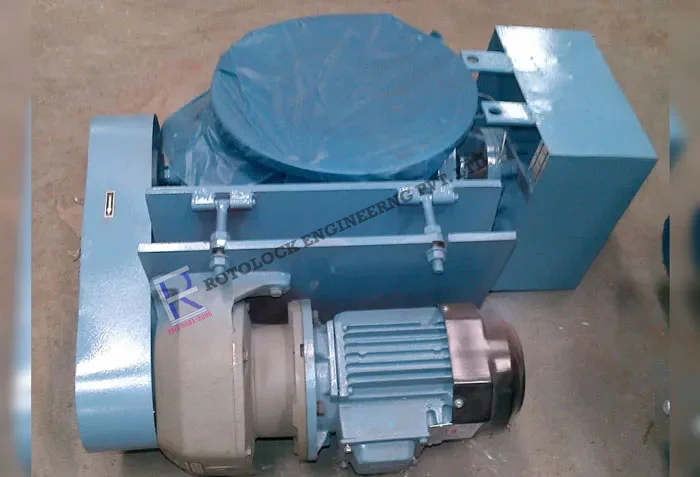
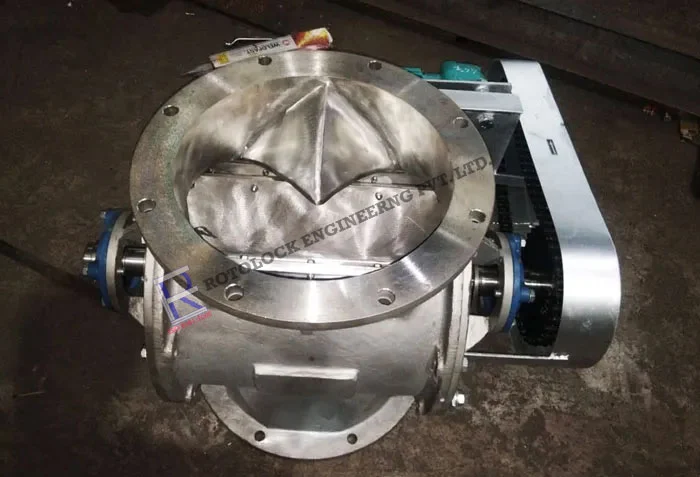
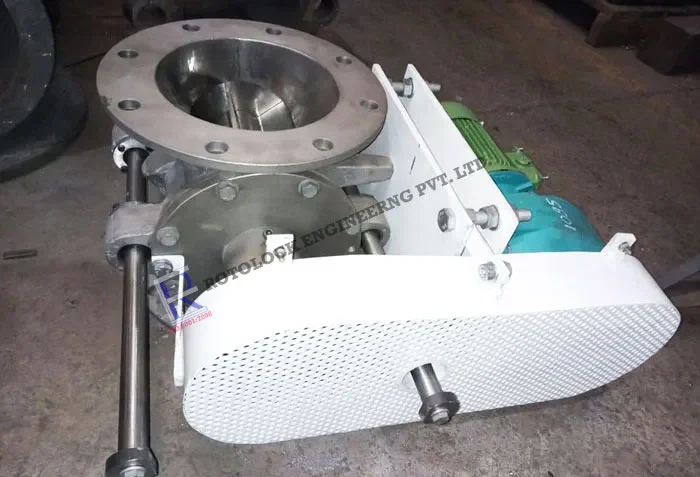
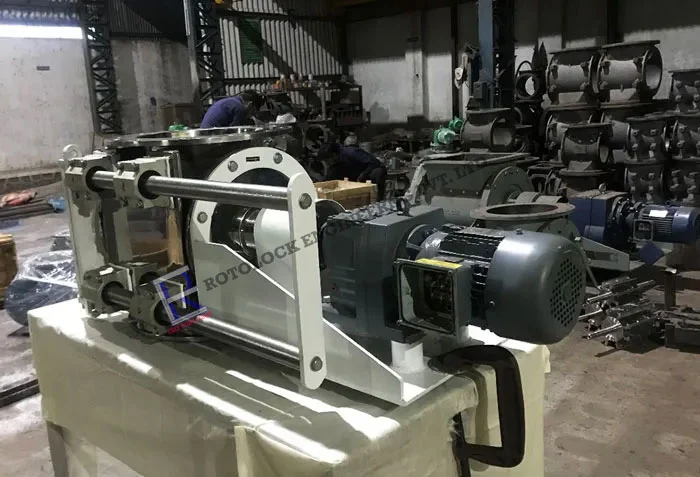
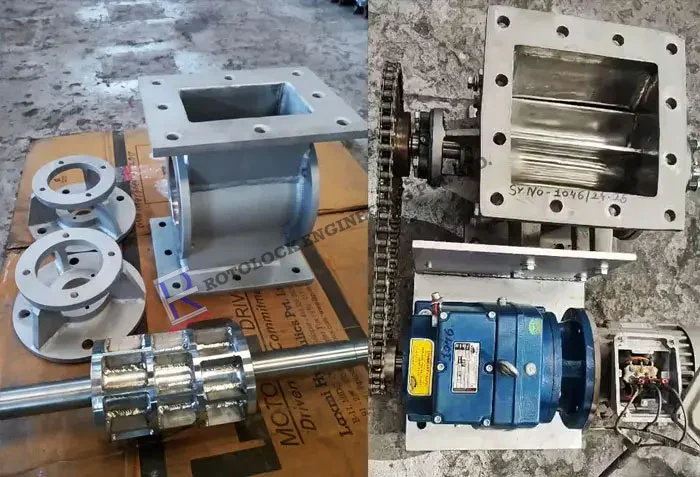
Rotolock Engineering Pvt. Ltd. is a leading Rotary Feeder Manufacturers, Suppliers and Exporters in Thailand. We specialize in providing high-quality rotary feeder solutions designed for controlled feeding, consistent material flow and efficient bulk material handling across various industries.
Established in 2006, we offer reliable rotary feeding solutions suitable for handling powders, granules and other dry bulk materials. Our product range includes Rotary Valve Feeders and Rotary Vane Feeders, designed to meet different material characteristics, feeding capacities, operating conditions and installation requirements.
With a focus on product quality, customized equipment solutions and customer satisfaction, we deliver dependable rotary feeding systems that support smooth material transfer and efficient industrial operations. Our commitment to reliable performance and competitive solutions makes us a trusted choice for businesses seeking rotary feeder solutions in Thailand.
What is a Rotary Feeder?
Rotary Feeder is a mechanical device designed to control and transfer materials from one section of an industrial process to another. It commonly uses a rotating component, such as a vane rotor, table or bowl, depending on the feeder design and application. Rotary feeders are used to regulate material movement, maintain consistent feeding and support the controlled supply of powders, granules and other materials to downstream equipment.
How Does Rotary Feeder Works?
Being a leading Rotary Feeder Manufacturer in Thailand, We have mentioned the working process such as below:
Material Entry: Material enters the feeder through an inlet connected to a hopper, storage bin or other feeding equipment.
Rotating Mechanism: The internal rotor, vane assembly, table or bowl moves according to the selected feeder design.
Material Movement: The rotating mechanism guides or carries material toward the designated discharge point.
Controlled Feeding: The feeder releases material at a controlled rate based on the equipment configuration, operating speed and material characteristics.
Discharge and Transfer: Material moves into the next stage of the production process, such as a conveyor, mixer, packaging system or processing machine.
Continuous Operation: When correctly selected and maintained, the rotary feeder supports consistent material transfer and reliable operation within the production system.
What Are the Different Types of Rotary Feeders We Provide?
As top Rotary Feeder Manufacturers in Thailand, following configurations represent common rotary feeder types used for industrial material handling and specialized feeding applications.
Rotary Table Feeder: A Rotary Table Feeder uses a rotating table to move, distribute or present materials to a designated collection or processing point. It can be considered for suitable manufacturing and material handling operations where controlled movement or distribution is required. Table diameter, rotational speed and material placement depend on the application.
Rotary Bowl Feeder: A Rotary Bowl Feeder uses a rotating bowl mechanism to organize and feed components toward a discharge track or subsequent machine. It is particularly relevant to automated assembly and component-handling applications requiring the consistent presentation of small parts. Bowl geometry and feeding arrangements depend on component shape, size and production requirements.
Rotary Feeder Machine: Rotary Feeder Machine is a broader equipment category covering rotary mechanisms used for material feeding, distribution and transfer. Depending on the configuration, it can be integrated with production lines, conveyors, hoppers, packaging equipment and other industrial machinery.
Rotary Vane Feeder: A Rotary Vane Feeder uses rotating vanes to guide and move materials through a feeding mechanism. Depending on the design, it can support controlled material distribution and consistent feeding in industrial processing systems. The vane arrangement and operating speed should be selected according to the material and required feed rate.
Rotary Valve Feeder: A Rotary Valve Feeder uses a rotating rotor with multiple pockets to transfer bulk materials from an inlet to an outlet. It is commonly considered for applications involving powders, granules and dry solids. Suitable designs can also help restrict air movement between connected process zones when used as an airlock.
Technical Specifications of Rotary Feeder
As Rotary Feeder Suppliers in Thailand, following table provides indicative design considerations for industrial rotary feeding equipment.
Specification
Typical Design Considerations
Equipment Type
Rotary Feeder / Rotary Valve Feeder
Application
Material Feeding, Distribution and Transfer
Material Handled
Powders, Granules, Components and Dry Solids
Feeder Configuration
Vane, Valve, Table or Bowl Type
Housing Material
Carbon Steel / Stainless Steel
Rotor Material
Carbon Steel / SS304 / SS316
Drive Arrangement
Geared Motor, 0.37–5.5 kW
Operating Speed
10–30 RPM
Feeding Capacity
1–50 m³/h
Feeding Control
Manual / Automated
Operating Temperature
Up to 200°C
Installation
Hopper, Production Line or Processing Equipment
Customization
1–10 Application-Specific Options
What are the Advantages of Industrial Rotary Feeder?
As Rotary Feeder Exporters in Thailand, we focus on equipment suitability, feeding consistency and compatibility with industrial production systems.
Controlled Material Feeding: The rotating mechanism supports regulated material movement according to the feeder design and operating requirements.
Application-Specific Configuration: Feeder dimensions, rotor arrangements, bowl geometry, table size and drive requirements can be evaluated according to the intended application.
Reliable Mechanical Operation: Appropriate component selection and regular maintenance help support dependable equipment performance.
Material Compatibility: Construction materials and contact surfaces can be selected according to material properties, cleaning requirements and operating conditions.
Automation Compatibility: Suitable rotary feeder systems can be integrated with sensors, variable-speed drives and production controls where required.
Where is Rotary Feeder Applicable?
As Rotary Feeder Dealers in Thailand, we support industrial applications that require controlled material movement, consistent feeding or automated component handling.
Chemical Industry: A Rotary Feeder for Chemical Industry applications can support the feeding of compatible powders and granules. Material compatibility and process safety must be considered during equipment selection.
Food Processing Industry: Rotary feeding equipment can be considered for suitable ingredient handling, processing and packaging applications. Contact materials, cleanability and applicable hygiene requirements should be evaluated.
Pharmaceutical Industry: Appropriate feeding mechanisms can support the handling of powders and production components when cleaning, contamination control and process requirements are satisfied.
Plastic and Polymer Industry: Rotary feeders can assist in transferring or distributing plastic granules, resin materials and other compatible production inputs.
Automated Assembly: Rotary bowl feeders can organize and present small components for assembly, inspection and packaging operations.
Packaging Industry: Suitable rotary feeder systems can supply materials or components to packaging machines according to production requirements.
Cement Industry: Rotary feeders can be used in suitable powder handling systems to support material transfer from storage equipment to downstream processing stages.
Industrial Performance Evaluation of Rotary Feeder
Important Selection Parameters
Required feeding capacity and production rate.
Installation space and equipment connection dimensions.
Operating temperature and environmental conditions.
Cleaning, maintenance and automation requirements.
Key Performance Evaluation Criteria
Accuracy of material distribution, where applicable.
Smoothness of rotor or table movement.
Motor performance and power consumption.
Wear resistance and maintenance requirements.
Compatibility with connected production equipment.
Industrial Application Example – Rotary Feeder Integration
A rotary feeder can be integrated into an industrial production line to regulate the transfer of materials or components between different processing stages.
Phase 1 – Application Assessment: The material type, required feed rate, operating conditions and installation arrangement are reviewed to determine the equipment requirements.
Phase 2 – Feeder Selection: A suitable rotary vane feeder, rotary valve feeder, rotary table feeder or rotary bowl feeder is selected according to the application.
Phase 3 – System Integration: The feeder is installed and connected to the relevant hopper, conveyor, processing machine or automated production line.
Phase 4 – Operational Evaluation: Feeding consistency, rotating mechanism performance, discharge behavior and compatibility with connected equipment are evaluated under intended operating conditions.
Phase 5 – Maintenance Planning: Inspection and maintenance schedules are established according to equipment usage, material characteristics and manufacturer recommendations.
How is the Cost of a Rotary Feeder Determined?
The cost of a Rotary Feeder depends on the equipment design, feeding mechanism, construction materials, capacity and intended application.
Feeder size, dimensions and required capacity.
Housing, rotor and contact material selection.
Drive system, motor power and speed control.
Automation, sensors and control panel requirements.
Operating temperature and environmental conditions.
Why Choose Rotolock Engineering Pvt. Ltd.?
Flexible Feeding Options: Different rotary feeding mechanisms can be considered according to the intended material handling or component feeding application.
Process Integration: Suitable rotary feeders can be incorporated into hoppers, conveyors, processing equipment and automated production systems.
26 years of Considerations: We emphasize suitable equipment selection, compatibility with the production process and maintenance planning for dependable operation.
Industrial Material Handling Solutions: We focus on rotary feeding equipment suitable for bulk material transfer and industrial production requirements.
Rotolock Engineering Pvt. Ltd. is a leading Rotary Feeder Manufacturers in Thailand, Suppliers and Exporters in Thailand. Selecting the right feeder depends on material characteristics, feeding capacity, equipment configuration and operating conditions. We focus on equipment solutions for controlled material feeding, efficient transfer and integration with industrial processing systems. Our rotary feeder options can be evaluated for applications involving powders, granules, dry bulk materials and automated component handling. Contact us to discuss your rotary feeder requirements.
Inspect rotating components and mechanical connections regularly.
Check bearings, seals and drive components where applicable.
Follow recommended lubrication and maintenance schedules.
Remove material buildup when required.
Monitor feeding consistency and unusual operating noise.
Controls the transfer of bulk materials between connected equipment.
Supports consistent discharge of powders and granules.
Helps regulate material flow into downstream systems.
Can help restrict air leakage when designed for airlock applications.
Industrial powders and granules.
Cement and mineral materials.
Compatible food processing ingredients.
Plastic granules and polymer materials.
Suitable small components used in automated assembly.
The correct feeder type depends on material flow properties, particle dimensions, hygiene requirements and operating conditions.
Required feeding capacity and operating speed.
Material size, density and flow characteristics.
Vane configuration and feeder dimensions.
Construction material and wear resistance.
Installation requirements and downstream equipment compatibility.
A Rotary Table Feeder generally uses a rotating table to move or distribute materials. A Rotary Bowl Feeder is commonly designed to organize and orient small components before delivering them to an automated assembly or processing machine. The appropriate type depends on whether the application requires material distribution or organized component feeding.