Rotary Airlock Valve Manufacturers in South Africa
Rotolock Engineering Pvt. Ltd. is a leading Rotary Airlock Valve Manufacturers, Suppliers and Exporters in South Africa. We offer high-quality rotary airlock valve solutions engineered for efficient material handling, controlled discharge and dependable industrial performance.
Our USP lies in delivering quality-focused equipment solutions tailored to different material characteristics and industrial process requirements. We offer high-quality rotary airlock valves suitable for handling powders, granules and other dry bulk materials across various industries.
With a strong focus on product quality, customized solutions, competitive pricing and customer satisfaction, we help businesses choose suitable equipment for their operational needs. Our commitment to reliable performance and responsive support makes us a trusted choice for rotary airlock valve solutions in South Africa. Contact us for enquiries and quotations!
What Is a Rotary Airlock Valve?
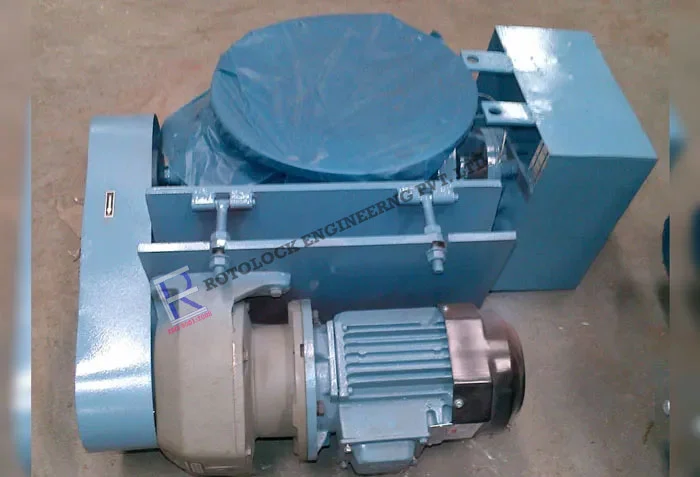
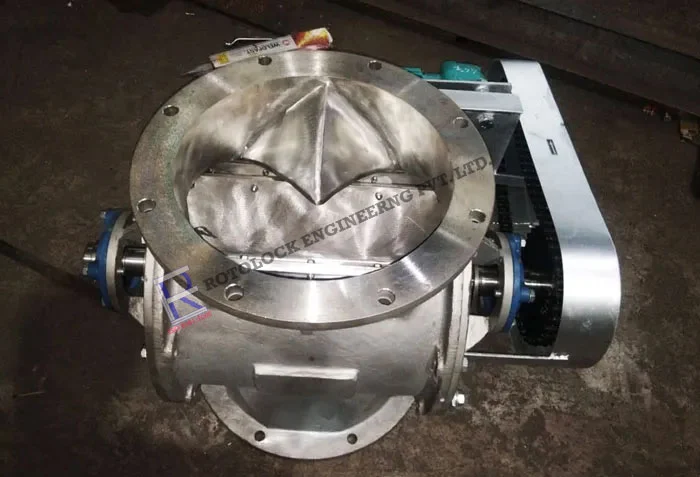
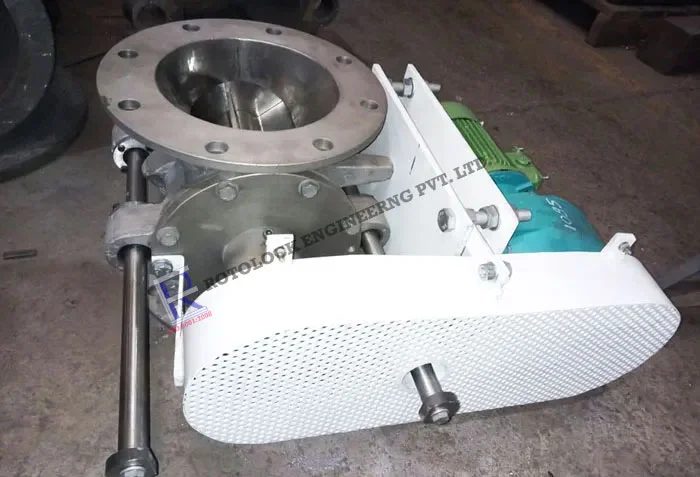
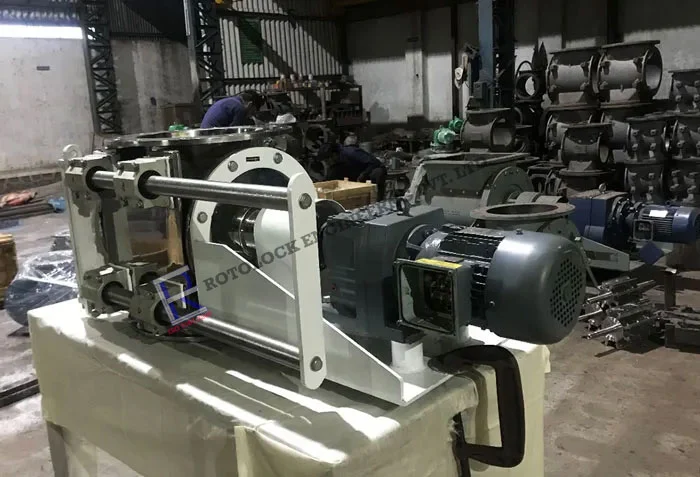
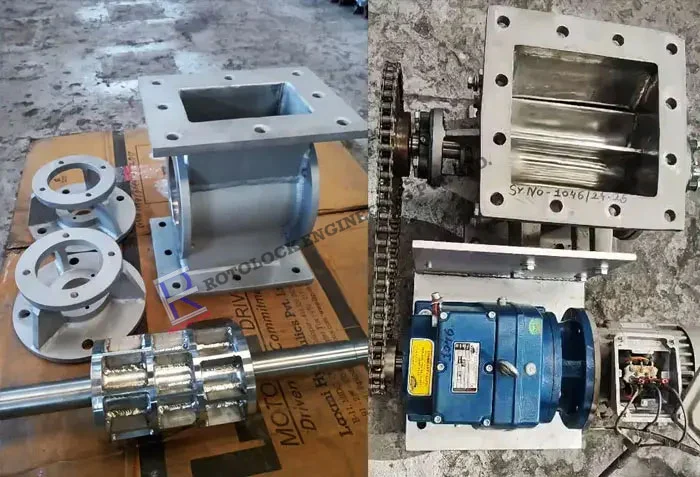
Rotary Airlock Valve is a mechanical device used to transfer bulk materials from one section of a process system to another while helping maintain an air seal between different pressure zones. It generally consists of a rotor with multiple pockets that rotates inside a housing to carry material from the inlet to the outlet. Rotary Airlock Valve is commonly installed beneath hoppers, silos, dust collectors, cyclones, filters and pneumatic conveying systems.
How Does Rotary Airlock Valve Works?
As a leading Rotary Airlock Valve Manufacturers in South Africa, We have mentioned the working process such as below:
Material Entry: Bulk material enters the valve through the inlet from a hopper, silo, dust collector or other connected equipment.
Rotor Pocket Filling: The rotating rotor contains multiple pockets that collect and carry a measured volume of material as these move through the housing.
Controlled Rotation: A suitable drive mechanism rotates the rotor at the selected speed to transfer material through the valve.
Material Discharge: As the rotor pockets reach the outlet, gravity allows the material to discharge into the next stage of the process.
Airlock Function: The rotor and housing arrangement restrict unwanted air movement between connected sections. The actual sealing performance depends on the valve design, clearances, pressure difference, material properties and operating conditions.
Continuous Operation: When correctly selected and maintained, the valve supports regular material discharge and consistent feeding during industrial operations.
What Are the Types of Rotary Airlock Valves We Provide?
As Rotary Airlock Valve Manufacturers in South Africa, following configurations represent common types used across industrial material handling systems.
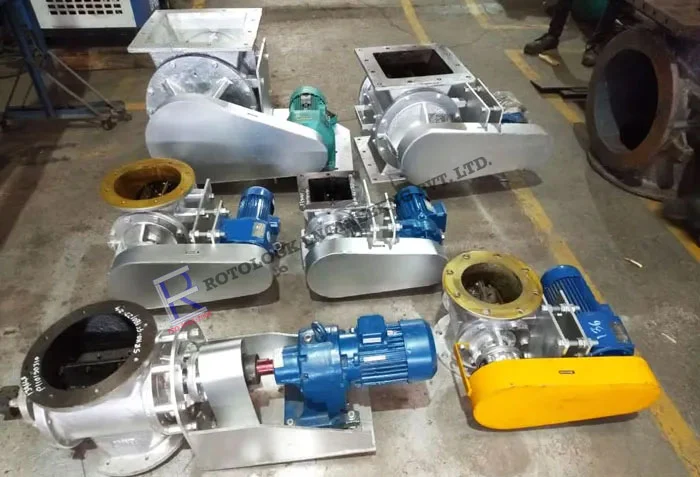
Dust Collector Rotary Airlock Valve: Installed below bag filters, dust collectors and cyclones to discharge collected dust while helping maintain the required pressure conditions in the system. Commonly relevant to cement, manufacturing and material processing plants.
Rotary Airlock Feeder Valve: It is used beneath hoppers, silos and dust collection equipment to regulate the discharge of dry bulk materials. The appropriate rotor design, operating speed and capacity depend on the material and process requirements.
Round Rotary Airlock Valve: It can be considered for suitable hoppers, bins and process equipment where the inlet and outlet configuration must match the connected system. Connection dimensions and mounting arrangements should be selected according to the installation requirements.
Drop-Through Rotary Airlock Valve: Used for gravity-based discharge of powders and granules from hoppers, silos, bag filters and dust collectors. The material falls through the valve outlet into downstream equipment.
Blow-Through Rotary Airlock Valve: Designed for applications where bulk material is introduced into a pneumatic conveying line. The configuration supports material transfer into the conveying airflow and should be selected according to pressure, material and conveying requirements.
Heavy-Duty Rotary Airlock Valve: Suitable for demanding bulk material handling applications involving abrasive materials such as cement, minerals, sand and ash. Wear-resistant components can be considered according to the material and operating conditions.
Technical Specifications of Rotary Airlock Valve
As Rotary Airlock Valve Suppliers in the South Africa, technical specifications of a Rotary Airlock Valve depend on the application, material characteristics, operating environment and required discharge capacity.
Specification
Typical Design Range
Equipment Type
Rotary Airlock Valve / Rotary Feeder
Application
Bulk Material Discharge and Feeding
Material Handled
Powders, Granules and Dry Solids
Valve Configuration
Round / Square
Rotor Design
6–12 Blades (Typical)
Housing Material
Cast Iron / Carbon Steel / SS304 / SS316
Rotor Material
Carbon Steel / SS304 / SS316
Drive Arrangement
Geared Motor, 0.37–5.5 kW
Sealing Arrangement
Standard / Application-Specific
Operating Speed
10–30 RPM
Capacity
1–50 m³/h
Operating Temperature
Up to 200°C (Design-Dependent)
Pressure Differential
Up to 1 bar (Design-Dependent)
What are the Benefits of Industrial Rotary Airlock Valve?
As Rotary Airlock Valve Exporters in South Africa, we focus on features suitability, reliable material handling and compatibility with industrial process systems.
Application-Specific Configuration: Valve dimensions, inlet and outlet connections, rotor arrangements and drive requirements can be evaluated according to the installation.
Material Compatibility: Housing, rotor and sealing materials can be selected according to the properties of the material being handled and the operating environment.
Integration with Industrial Equipment: Rotary airlock valves can be incorporated into suitable dust collection systems, pneumatic conveying arrangements, filters, cyclones and bulk material handling lines.
Controlled Material Discharge: The rotor-pocket arrangement supports regular material transfer from hoppers, silos and other connected equipment.
Airlock Performance: Suitable rotor clearances and housing design help restrict air leakage between connected process zones.
Where is Rotary Airlock Valve Used?
As Rotary Airlock Valve Dealer in South Africa, Our Rotary airlock valves are used in industrial facilities that require controlled transfer of dry bulk materials.
Plastic and Polymer Processing: Rotary Airlock Valve for Bulk Solids Used in suitable systems for transferring plastic granules, resins and other dry bulk materials.
Cement Industry: Rotary Airlock Valve for Cement Industry Used in suitable applications beneath cement silos, dust collectors, bag filters and material handling equipment.
Chemical Industry: Rotary Airlock Valve for Chemical Industry Used for handling compatible chemical powders and granules where material compatibility and process safety are properly addressed.
Dust Collection Systems: Installed beneath dust collectors, cyclones and bag filters to discharge collected dust while helping maintain system pressure conditions.
Pneumatic Conveying Systems: Supports the controlled introduction or discharge of bulk solids in compatible pneumatic conveying arrangements.
Pharmaceutical and Powder Processing: May be used for suitable powder handling applications where construction, cleaning and contamination-control requirements are met.
Industrial Application Example – Rotary Airlock Valve Integration
A rotary airlock valve may be integrated into a bulk material handling system to improve the controlled discharge of collected dust or process powder.
Phase 1 – Application Assessment: The material characteristics, discharge requirement, pressure conditions and installation arrangement are reviewed to establish the operating requirements.
Phase 2 – Valve Selection: A suitable valve configuration, rotor arrangement, housing material, sealing arrangement and drive system are selected according to the application.
Phase 3 – System Integration: The valve is installed beneath the relevant hopper, silo, filter or other process equipment with suitable connections and drive arrangements.
Phase 4 – Operational Evaluation: Material discharge, air leakage, rotor movement and overall operating performance are assessed under the intended conditions.
Phase 5 – Maintenance Planning: Inspection and maintenance intervals are established according to operating hours, material abrasiveness and the manufacturer's recommendations.
How the Cost of Rotary Airlock Valve Determine ?
The cost of a Rotary Airlock Valve depends on its design, construction materials, capacity and intended industrial application.
Important factors affecting the cost include:
Material abrasiveness and corrosiveness.
Operating temperature and pressure differential.
Drive type and motor requirements.
Valve size and connection dimensions.
Rotor design and construction.
Industrial Performance Evaluation of Rotary Airlock Valve
Important Selection Parameters
Required material discharge capacity.
Rotary Airlock Valve for Food Processing and flow characteristics.
Particle size and material abrasiveness.
Installation space and connection dimensions.
Key Performance Evaluation Criteria
Material discharge consistency.
Air leakage under operating conditions.
Rotor and housing wear.
Drive performance and power requirements.
Why Choose Us?
Industry-Specific Requirements: Cement, food processing, chemical and general manufacturing applications can require different equipment configurations and material choices.
Industrial Material Handling: Our solutions address bulk material discharge and feeding requirements across suitable industrial applications.
Flexible Application Selection: Valve design and construction requirements can be assessed according to material properties, operating conditions and installation needs.
Process Compatibility: Proper valve selection helps support integration with hoppers, silos, dust collectors, filters and conveying systems.
Rotolock Engineering Pvt. Ltd. is a well-known Rotary Airlock Valve Manufacturers in South Africa, Suppliers and Exporters in South Africa. Our Rotary Air Lock Valves for various industrial applications that call for material discharge under control conditions, reliable feeding and good integration with bulk material handling applications. We perform an application-based approach, taking into account both the properties of the materials and the capacity, pressure, temperature and construction requirements of the valve when selecting the appropriate valve configuration is vital to ensure reliable operation. Contact us to discuss your rotary airlock valve requirements.